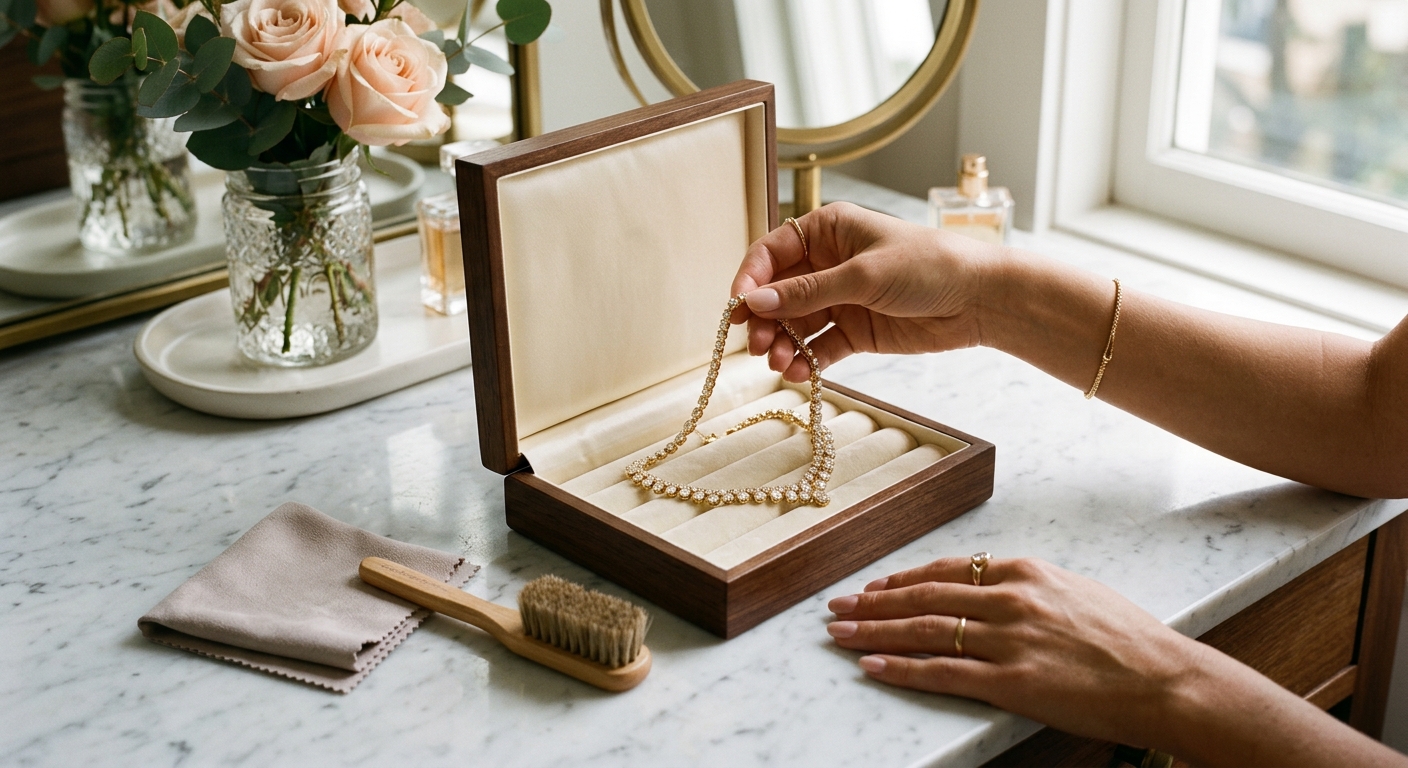
Fine jewelry is an investment, both financial and sentimental. Whether you have a diamond solitaire necklace passed down through generations or a pair of gold earrings you saved up for, proper care ensures these pieces retain their beauty and value for decades. This guide walks through everything from daily maintenance to professional servicing.
Daily Care: Building Good Habits
The way you handle your jewelry day to day has the biggest impact on its longevity. Small habits prevent most damage before it happens.
Put Jewelry On Last, Take It Off First
Always apply perfumes, lotions, and cosmetics before putting on your jewelry. Chemicals in these products can dull gemstones, discolor metals, and leave residue that builds up over time. When you return home, remove jewelry first, before washing your face or changing clothes.
Avoid Water and Chemicals
Remove jewelry before swimming, showering, or doing dishes. Chlorine in pool water can weaken gold and cause pitting in some alloys. Hot water can loosen prongs holding gemstones. Household cleaning products contain chemicals that can damage both metals and stones.
Store Pieces Separently
Never toss jewelry into a single box where pieces can scratch each other. Diamonds, being the hardest natural material, will scratch softer stones and metals on contact. Use individual pouches, compartments in a jewelry box, or small zip-top bags to keep pieces separated.
Cleaning Your Jewelry at Home
Regular cleaning removes oils, dust, and residue that dim the brilliance of your pieces. You can handle most routine cleaning at home with simple tools.
Gold Jewelry
Mix a few drops of mild dish soap in warm (not hot) water. Soak gold pieces for 10 to 15 minutes, then gently scrub with a soft-bristled toothbrush. Rinse in clean water and dry with a lint-free cloth. Avoid abrasive cleaners or brushes with stiff bristles, which can scratch gold surfaces.
Diamond Jewelry
Diamonds attract oils, which quickly reduces their sparkle. Clean diamond pieces with the same mild soap solution, but pay special attention to the underside of the stone where grime accumulates. A soft brush reaches the pavilion and prongs effectively. For stubborn residue, a solution of one part ammonia to six parts water works well, but use it sparingly and never on fracture-filled stones.
Pearls and Soft Stones
Pearls, opals, turquoise, and other soft or porous stones require extra care. Never soak them. Instead, wipe gently with a damp soft cloth after each wearing. Store pearls flat rather than hanging, as the silk thread can stretch over time.
Proper Storage Solutions
How you store jewelry when you are not wearing it matters as much as how you clean it.
Use a Lined Jewelry Box
A jewelry box with soft fabric lining (velvet or satin) protects pieces from scratches and tarnishing. Look for one with individual compartments and a tight-fitting lid to limit air exposure.
Anti-Tarnish Strategies
Silver and some gold alloys tarnish when exposed to air. Place anti-tarnish strips or small silica gel packets in your jewelry box to absorb moisture and sulfur compounds. Change them every six months for continued protection.
Travel Storage
When traveling, use a hard-shell jewelry case with padded compartments. Never pack fine jewelry in checked luggage. Keep it in your carry-on and, when possible, wear your most valuable pieces rather than packing them.
When to Seek Professional Care
Some maintenance tasks are best left to professionals. A jeweler has the tools and expertise to handle repairs safely.
Annual Inspections
Have a jeweler inspect your fine pieces once a year. They check prong tightness, clasp wear, and stone security. Catching a loose prong early prevents the heartbreak of a lost diamond.
Professional Cleaning
Jewelers use ultrasonic cleaners and steam jets that remove dirt from areas home cleaning cannot reach. An annual professional cleaning restores the full brilliance of your pieces.
Restringing Pearl Necklaces
If you wear pearl necklaces regularly, have them restrung every one to two years. The silk thread weakens over time, and a break can scatter pearls across the floor with no way to recover the original order.
Insurance and Documentation
Protect your investment with proper documentation and insurance coverage.
- Appraisals: Have fine pieces appraised every three to five years, as gold and diamond prices fluctuate.
- Photographs: Keep clear photos of each piece from multiple angles, including any identifying marks or hallmarks.
- Insurance: Add valuable pieces to your homeowners or renters insurance policy, or purchase a separate jewelry insurance policy that covers loss, theft, and damage.
- Receipts: Store original purchase receipts and any certificates (such as GIA diamond grading reports) in a safe place.
Quick Reference Care Chart
- 18k Gold: Clean with mild soap and warm water. Store in soft pouch. Avoid chlorine.
- Diamonds: Clean with soap solution or ammonia mixture. Annual professional cleaning. Check prongs yearly.
- Pearls: Wipe with damp cloth after each wear. Never soak. Restring every 1 to 2 years.
- Sterling Silver: Polish with silver cloth. Store with anti-tarnish strips. Avoid humidity.
- Gemstone Earrings: Clean settings gently with soft brush. Check backs for tightness regularly.
With consistent care, your fine jewelry will look as striking in twenty years as it does today. The key is building simple habits: clean regularly, store carefully, and seek professional help once a year. Your pieces carry stories and memories, and proper care ensures those stories can be passed along with the jewelry itself.

